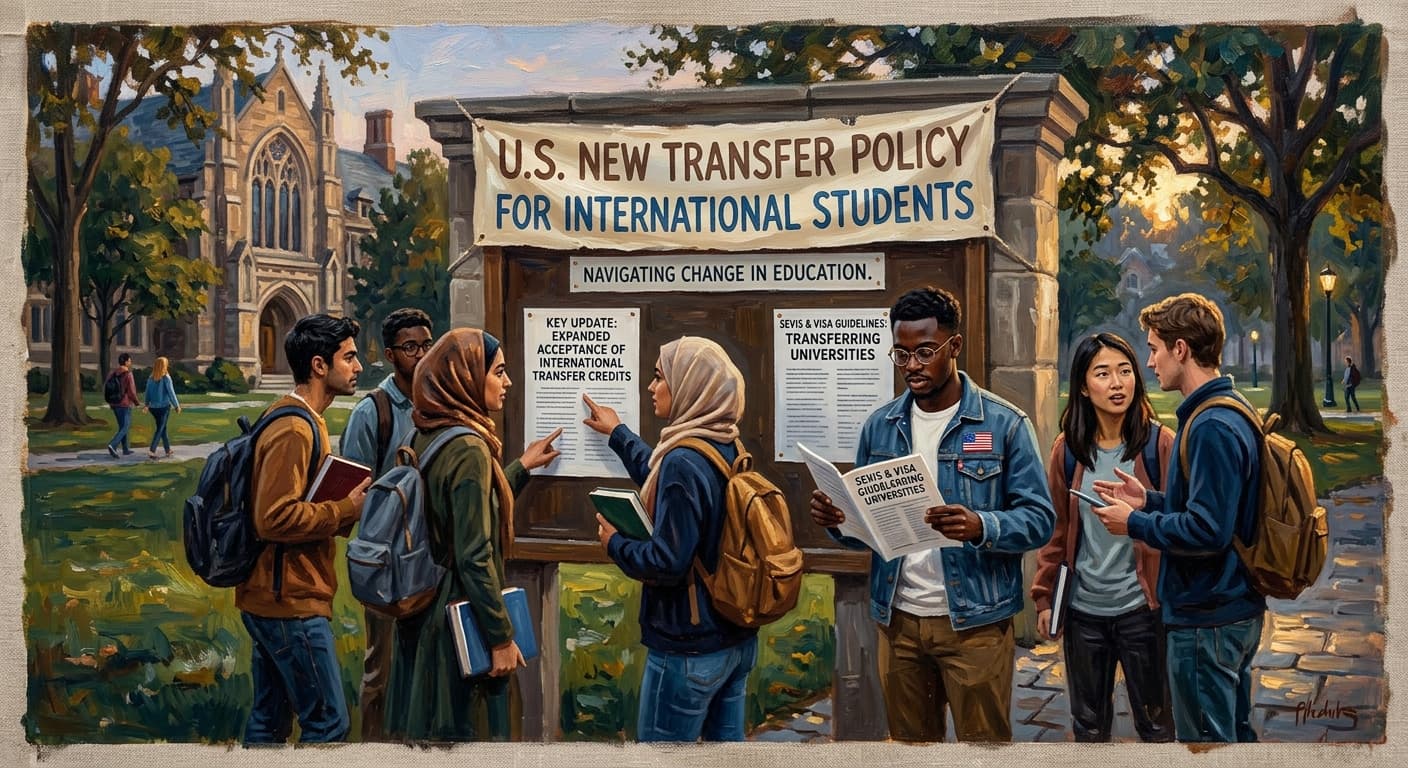
US New Transfer Policy for International Students: What You Need to Know in 2026
The US new transfer policy for international students has become one of the most talked-about topics in global education circles this year. On July 17, 2026, the Department of Homeland Security (DHS) published a final rule that reshapes how F-1 and J-1 visa holders move between schools, change majors, and progress through academic levels. Set to take effect on September 15, 2026, this policy marks the most significant change to student visa regulations in decades, and every current or prospective international student in the United States needs to understand what it means for them.
Why the US New Transfer Policy for International Students Matters
For more than thirty years, F-1 students were admitted under a system known as "duration of status" (D/S). This allowed students to remain in the country as long as they maintained their enrollment, without a fixed expiration date tied to their I-94 record. The new transfer policy for international students ends that open-ended approach. Instead, most F and J visa holders will now be admitted for a fixed period, capped at four years, based on the end date listed on their Form I-20 or DS-2019, plus a grace period to depart or apply for an extension.
This shift affects far more than paperwork. It directly limits academic mobility, meaning students who want to transfer schools, switch majors, or move to a different degree level will face far stricter conditions than before.
Key Changes Under the New Transfer Rules
1. First-Year Transfer Restrictions for Undergraduates
Under the US new international student transfer policy, undergraduate F-1 students generally cannot transfer to another school or change their "educational objective" (meaning their major or degree level) during their first academic year at the institution that issued their initial Form I-20. This restriction applies regardless of the reason, unless the Student and Exchange Visitor Program (SEVP) grants a narrow exception for "extenuating circumstances," such as a school closure or a natural disaster that disrupts instruction.
2. Near-Total Transfer Ban for Graduate Students
Graduate-level F-1 students face even tighter limits. Under the new transfer policy, they are generally barred from transferring schools or changing their major or degree level at any point during their program, again unless SEVP approves an exception under the same strict standard. This is a major departure from the previous system, where graduate students had considerably more flexibility to move between institutions.
3. No Repeating or Downgrading Programs
Another important piece of the new transfer policy for international students is that once a student completes a program on or after September 15, 2026, they generally cannot begin another F-1 program at the same or a lower educational level. Any subsequent program typically must be at a higher academic level, closing a pathway that many students previously used to pursue additional undergraduate credentials or lateral moves between fields.
4. Shorter Grace Period After Graduation
The rule also shortens the post-completion grace period for F-1 students from 60 days to 30 days, aligning it with the J-1 grace period. This gives graduates far less time to depart the country, apply for a change of status, or transition into Optional Practical Training (OPT) after finishing their studies.
5. Fixed Admission Periods and Extension Fees
Instead of open-ended stays, most students will now receive a specific "admit-until" date on their I-94, capped at four years. If a program runs longer, such as many PhD or professional degrees, students must file a formal Extension of Stay application with US Citizenship and Immigration Services and pay a fee reported to be at least $420 per request.
Who Is Affected by This Policy
Students already inside the United States on September 15, 2026, are not required to take immediate action, but they will become subject to the new fixed-period rules once they travel and re-enter the country or file for an extension of stay. New students entering after the effective date will be governed by the rules from day one. F-2 dependents, including spouses and children, are also affected, since their period of admission cannot exceed that of the principal F-1 student.
What Students Should Do Now
Given the complexity of the new transfer policy for international students, current and prospective students should take a few practical steps:
Talk to your Designated School Official (DSO) before making any decision about transferring schools or changing majors, especially if you are within your first academic year.
Review your Form I-20 dates carefully, since your future admission period will be tied directly to your program end date.
Plan international travel cautiously, as re-entering the US after the effective date will place you under the new fixed-admission framework immediately.
Track SEVP guidance closely, since procedures for requesting an "extenuating circumstances" exception have not yet been formally published.
Consult a qualified immigration attorney for any transfer, change of major, or degree-level change that could be affected by this rule, since individual SEVIS records and program dates vary widely.
Legal Uncertainty Still Surrounds the Rule
It is worth noting that this new transfer policy for international students is not necessarily final in practice. The rule is subject to review under the Congressional Review Act, and legal challenges are considered likely given its broad economic and educational implications. Universities, policy researchers, and immigration advocates have raised concerns about the impact on doctoral programs, medical training, and the overall competitiveness of US higher education in attracting global talent. Until court rulings or congressional action clarify the rule's future, students should assume the September 15, 2026 effective date will hold and plan accordingly.
Final Thoughts
The US new transfer policy for international students represents a fundamental shift away from the flexibility that international students have relied on for decades. Understanding the first-year transfer restrictions, the graduate-level transfer ban, the shortened grace period, and the new extension process is essential for anyone currently studying in the US or planning to enroll soon. Because individual circumstances vary and additional federal guidance is still expected, students should stay in close contact with their school's international student office and seek professional immigration advice before making any transfer or program changes under this evolving policy.
This article is for informational purposes only and does not constitute legal advice. Immigration outcomes depend on individual SEVIS records, program dates, and travel history. Always consult your school's international student office or a licensed immigration attorney before making transfer or status decisions.